



How to Deal with Conflict and Toxicity in Online Groups
Conflict can happen in any online community, including dating groups and local social spaces. Different opinions, awkward wording, or a misunderstanding do not automatically make someone toxic. The useful question is what happens next: can people clarify, respect boundaries, and move on, or does the behavior become repeated, targeted, and intimidating?
A thoughtful response can prevent a disagreement from growing, but you do not have to manage every difficult interaction yourself. Use the steps below to decide when to talk, when to involve moderators, and when to protect your time by disengaging.
Recognize the difference between conflict and toxicity
A disagreement is usually a difference of opinion that people can discuss without targeting one another. Toxic behavior involves repeated hostility, harassment, bullying, or boundary violations that make participation feel unsafe or unwelcome.
Look at the pattern, target, and response to boundaries rather than a single uncomfortable message. A member may phrase criticism poorly, then listen and clarify when you explain its impact. That is different from someone who keeps insulting you, follows you across threads, shares private messages to shame you, or continues contacting you after you ask them to stop.
- Ordinary conflict: People disagree about a group rule, a dating preference, or how a conversation was handled. They stay focused on the issue and can accept a pause.
- Concerning conduct: A member repeatedly singles someone out, uses slurs or threats, posts unwanted sexual comments, or pressures someone after a clear refusal.
- Boundary testing: Someone treats a request to stop as an invitation to argue, demands personal details, or moves the interaction to other channels after being blocked.
Context matters. A heated exchange may involve several people, and not every rude comment is a sustained campaign. Still, you do not need to prove someone’s intentions before taking reasonable steps to protect yourself. Focus on observable actions and their effect on the conversation.
Pause before responding
To keep an online conflict from escalating, pause before replying, check what you want to achieve, and choose the least disruptive effective response. A short delay can help you avoid posting something that prolongs the argument or exposes more personal information.
Step away from the thread for a few minutes, or longer if you feel upset. Draft a reply in a notes app rather than sending it immediately. Then ask yourself: Is a response necessary? Is this the right place to respond? Would a moderator or private boundary be more useful?
If the issue seems to be a misunderstanding, ask one neutral question or clarify your meaning. For example: “I read your comment as criticism of my personal choice. Did you mean to challenge the group rule instead?” This gives the other person a chance to explain without assuming bad intent.
When someone is trying to provoke you, silence can be a practical choice. Muting the thread, closing the app, or asking a trusted member to review your draft may reduce the pull of an immediate reply. Avoid quote-posting, sarcasm, and public callouts; these often draw an audience into the conflict and make resolution harder.
Address the issue calmly and clearly
Address a conflict by naming the specific behavior, stating what you need, and keeping your message brief. If the person ignores your boundary or the interaction feels unsafe, stop engaging and use other support options.
Use a simple structure: behavior, impact, boundary. For example: “You have sent me several direct messages after I said I wanted to keep the conversation in the group. Please stop messaging me privately.” This is clearer than making claims about the other person’s character, and it gives moderators a specific action to assess.
Choose the right channel. A low-stakes misunderstanding may be resolved in the thread or a calm private message, if you feel comfortable. A public correction can help when misinformation affects the whole group, but keep it factual and relevant. Do not publish someone’s private details or encourage members to confront them.
You can disengage without winning the argument. A boundary is not a debate prompt, and you do not owe repeated explanations. If the person continues, save the relevant messages and move to muting, blocking, or reporting rather than replying again.
Use group rules and moderation tools
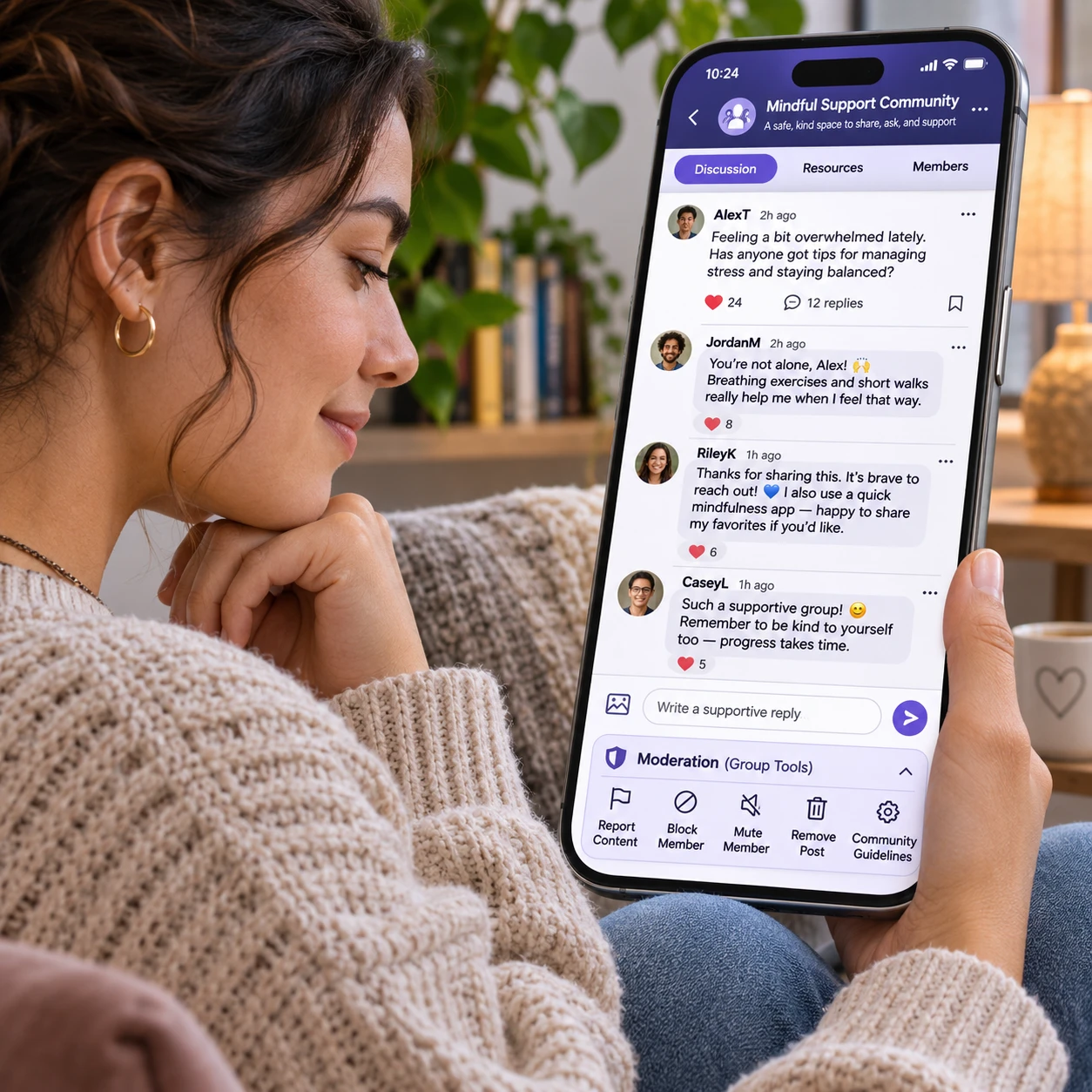
Use community guidelines and moderation tools when behavior is repeated, violates a rule, or continues after a clear boundary. Document relevant activity, report it through the platform or group process, and block or mute the person if that helps you feel safer.
Before reporting, check the group’s rules on harassment, privacy, unwanted contact, and respectful participation. Save screenshots or links that show the behavior and its context, including dates when useful. Keep records private and share only what moderators need to review; avoid reposting sensitive material to the group.
- Mute: Use this when you want to stop seeing a person or thread without making a formal complaint.
- Block: Use this to limit direct contact or visibility where the platform supports it. Blocking may not prevent someone from seeing public posts or using another account.
- Report: Use this for conduct that appears to break platform or group rules, such as threats, targeted harassment, or repeated unwanted contact.
- Contact moderators: Describe the specific behavior, identify the relevant rule if possible, and state what action you are requesting.
Moderation is most effective when rules are applied consistently, not according to popularity or personal relationships. If a moderator is involved in the conflict, ask another moderator or use the platform’s reporting channel. Reporting can take time, and a decision may not match your expectations, so keep using privacy controls and disengage while you wait.
Protect your well-being and personal information
Protect your well-being by limiting exposure, securing personal information, and getting support from someone you trust. If an interaction feels unsafe, you can leave the group without waiting for permission or trying to repair the community first.
Review what your profile reveals: your full name, workplace, neighborhood, routine, phone number, and linked social accounts. Dating groups can involve personal conversations, so think carefully before sharing screenshots, intimate details, or contact information. Check privacy settings and avoid moving to a less moderated channel if you do not feel comfortable.
Set practical limits. Turn off notifications, check the group at a chosen time, or take a break after an upsetting exchange. Talk with a trusted friend who is not invested in the dispute; ask them to listen or help you decide what to do, rather than to confront the other person on your behalf.
If messages include threats, attempts to expose private information, or persistent contact across accounts, preserve evidence and report it to the platform. Consider contacting relevant local support services if you have an immediate safety concern. Do not investigate or confront someone in a way that could increase risk.
Help create a healthier group culture
Healthier online groups set clear expectations, welcome respectful disagreement, and respond consistently when someone crosses a line. Members can help by modeling the behavior they want to see, while moderators remain responsible for applying group rules fairly.
In dating and community spaces, useful guidelines should explain what respectful participation looks like in practice. They can address consent, unwanted romantic or sexual attention, personal information, direct messages, identity-based abuse, and how to report a concern. Rules work best when members can find them easily and understand what happens after a report.
Members can improve the tone by challenging ideas without attacking people, asking before moving a conversation into direct messages, and respecting a clear “no.” If someone is targeted, offer support without demanding that they share details or speak publicly. Report rule-breaking through the proper channel rather than organizing a pile-on.
Moderators can make reporting easier with a clear contact route, explain when they will follow up, and apply consequences consistently. They should also distinguish a heated but good-faith disagreement from repeated harmful conduct. A welcoming group is not one where nobody disagrees; it is one where disagreement does not become a license to intimidate or exclude.
Frequently asked questions
How can I tell whether an online disagreement has become harassment?
Look for repeated, targeted behavior, especially after someone asks for it to stop. Insults, unwanted sexual messages, threats, following a person between threads, or sharing private information are stronger warning signs than a single disagreement. Record what happened and compare it with the group’s rules.
Should I respond to someone who is being toxic?
Only if a brief response is likely to help and you feel comfortable doing so. State the behavior and your boundary once, then disengage if the person argues, escalates, or continues. You are not responsible for persuading them to change.
When should I report or block a group member?
Report behavior that appears to violate group or platform rules, particularly repeated harassment, threats, or unwanted contact. Block or mute when you need to limit interaction; you can use these tools even if you are not ready to file a report.
What should I do if moderators do not address the problem?
Follow up once with a concise, factual report and relevant evidence. If the moderators are unavailable, involved, or still do not respond, use the platform’s reporting tools, adjust privacy settings, and consider leaving the group. You do not have to stay in a community that repeatedly fails to protect its members.