

How to Build Meaningful Connections in a Digital Age: A Practical Guide
We have more ways to reach each other than at any point in human history — and yet a growing number of people describe feeling profoundly alone. Group chats buzz constantly. Notification counts climb. Follower numbers go up. But something that actually feels like connection stays stubbornly out of reach. If that tension sounds familiar, you're not imagining it.
The good news is that digital tools don't have to produce shallow relationships. The problem isn't the medium — it's how most of us are using it. This guide offers concrete, immediately applicable ways to build relationships online that actually matter.
Why Meaningful Connection Feels Harder Online
Digital communication compresses the signals we rely on to bond with other humans. Without body language, shared physical space, or the natural rhythm of in-person conversation, interactions can feel transactional even when neither person intends them to be.
Think about the last time you typed "sounds good!" in response to something a friend shared. It was polite. It was efficient. It communicated almost nothing about how you actually felt. That's the default mode most platforms optimize for — fast, frictionless, low-commitment exchanges that generate engagement without generating closeness.
There's also the asymmetry problem. Social media lets us broadcast to hundreds of people simultaneously, which feels social, but broadcasting is not the same as relating. Posting into a feed and receiving likes is closer to performing than connecting. The brain registers the difference even when we tell ourselves it doesn't.
Acknowledging this honestly — rather than pretending digital interaction is equivalent to sitting across from someone — is the first step toward using these tools more wisely.
The Difference Between Networking and Genuine Connection
Networking is transactional by design: you exchange value, build visibility, and maintain contacts who might be useful later. That's legitimate and often valuable. But it operates on a fundamentally different logic than friendship or community.
Genuine connection is built on shared values, not shared utility. When you relate to someone because of who they are — their perspective, their humor, the specific way they think about a problem — that relationship has a foundation that survives the moment when neither of you needs anything from the other.
The practical difference shows up in how you approach conversations. Networking asks: "What does this person do, and how might we help each other?" Connection asks: "What does this person care about, and do I genuinely want to know more?" Both questions are valid, but only one leads to the kind of relationship that actually sustains you.
Before reaching out to someone online, it's worth pausing to ask which mode you're in. There's no shame in networking — just be honest with yourself about what you're building.
Choose Your Platforms and Communities with Intention
Social media intentionality means actively choosing where you spend your digital social energy rather than defaulting to whatever platform has the most users or the loudest notifications. High-follower-count platforms are optimized for reach, not depth — and those two things are often in direct tension.
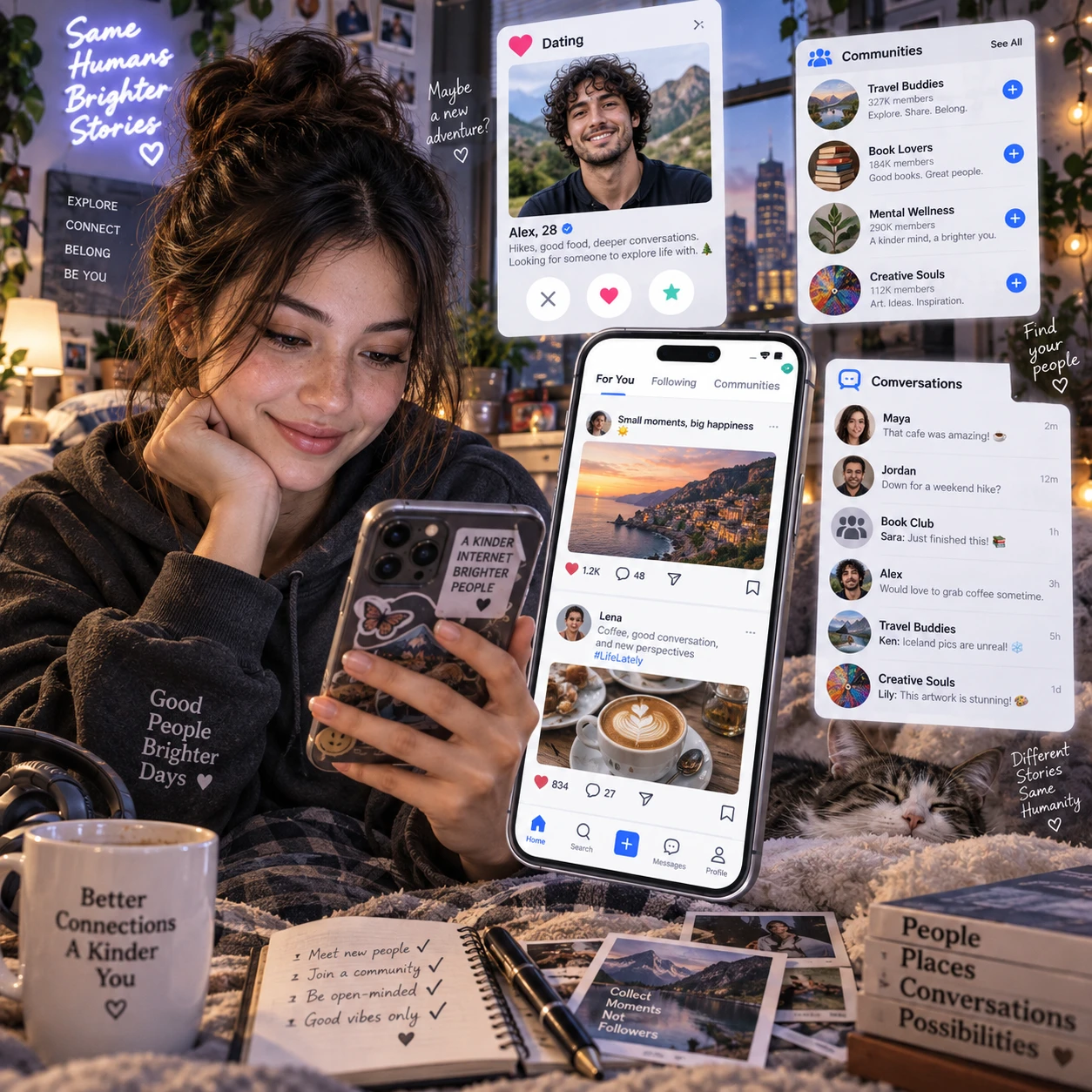
A more useful question than "where are the most people?" is "where are my people?" Online communities organized around specific shared interests — a craft, a cause, a creative practice, a life experience — tend to produce more genuine bonds than general-purpose social feeds. When everyone in a space cares about the same thing, conversations have a natural starting point that goes beyond small talk.
Consider narrowing your active participation to two or three spaces where you can show up consistently, rather than maintaining a thin presence across ten platforms. Depth of participation matters more than breadth of membership. A small forum where you're a recognized, contributing voice will serve your need for belonging far better than five large communities where you're essentially anonymous.
Practices That Deepen Digital Relationships
Relationships deepen through repeated, genuine exchanges over time — and that's as true online as it is in person. The behaviors that move a digital acquaintance toward a real friend are specific and learnable.
Practice Active Listening, Even in Text
Active listening doesn't disappear because the conversation is typed. It means responding to what someone actually said rather than what you expected them to say. It means asking follow-up questions that show you read carefully. It means resisting the urge to immediately redirect the conversation to your own experience.
When someone shares something personal in a message or a comment, the instinct is often to reply quickly with a parallel story. Try instead to stay with their experience for one more exchange before you bring in your own. That small shift signals that you're genuinely present — and people notice.
Let Vulnerability Lead
Psychological research consistently shows that vulnerability is the mechanism through which closeness actually forms. Sharing something real — a doubt, a failure, an unconventional opinion — invites the other person to meet you at a deeper level. It's also a form of trust: you're signaling that you believe this relationship can hold something more than pleasantries.
Online, vulnerability requires a bit more deliberate effort because the default mode is curated and polished. Start small. Share a genuine reaction rather than a performative one. Admit when you don't know something. Disagree thoughtfully instead of just agreeing to keep the interaction smooth.
Follow Through, Consistently
Follow-through is perhaps the most underrated relationship-building behavior in digital spaces. If you say you'll read someone's article, read it and say something specific about it. If you mention wanting to catch up, send the message. Trust is built incrementally through exactly this kind of small, repeated reliability — and it's rare enough online that it genuinely stands out.
Bridging the Online-to-Offline Gap
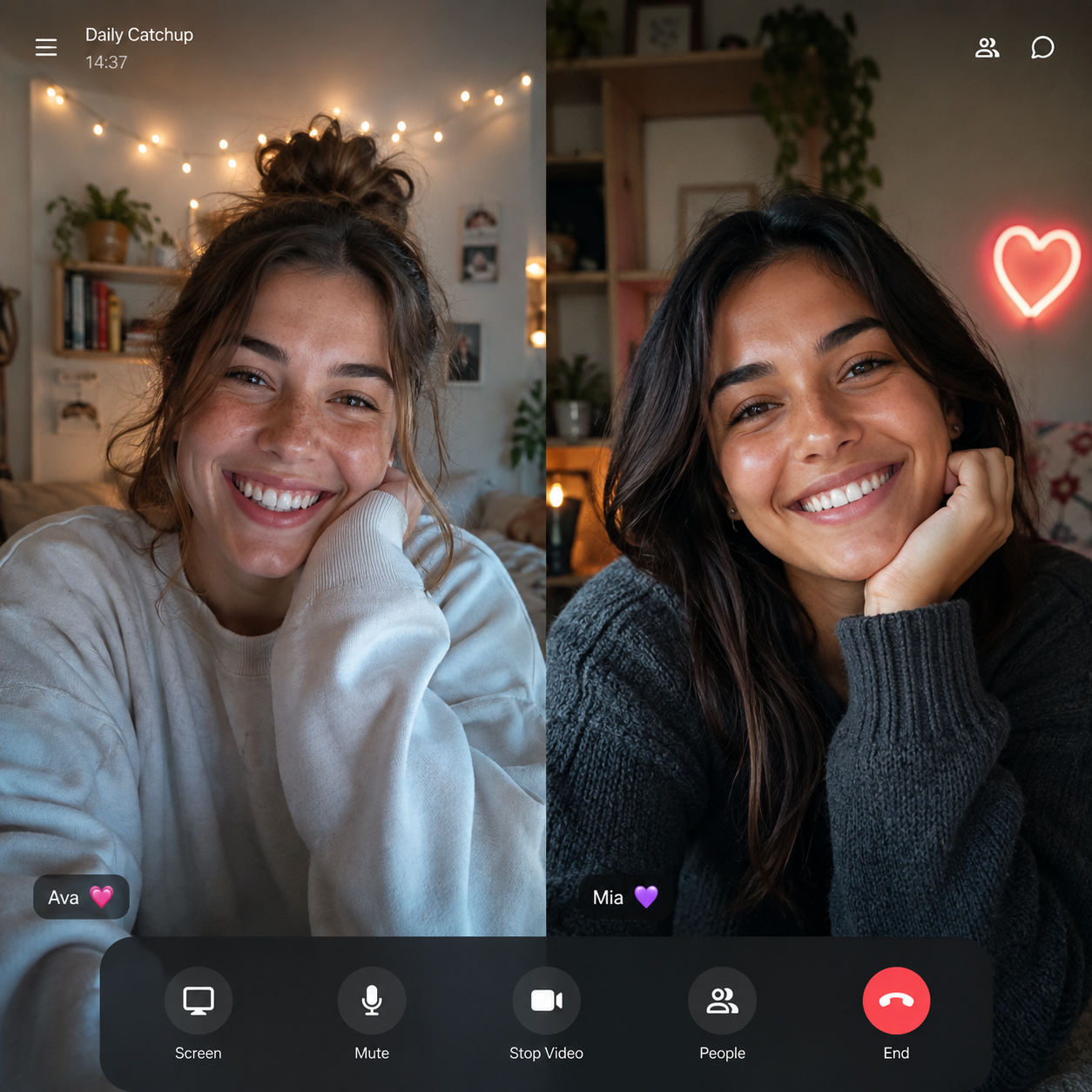
Digital relationships that transition into some form of real-world contact — even a single video call — tend to become significantly more resilient. Synchronous communication, where both people are present at the same time, carries far more relational bandwidth than asynchronous text exchanges.
A video call introduces facial expression, tone of voice, and real-time responsiveness. It's harder to misread someone's mood. It's easier to laugh together. Even a 20-minute call can do more for a relationship than weeks of back-and-forth messages.
The barrier to suggesting a call often feels higher than it actually is. Most people are quietly hoping someone else will make the move. A simple "would you want to hop on a call sometime?" lands better than you might expect — especially with someone you've been exchanging thoughtful messages with for a while.
For connections that live in the same city or region, the same logic applies to in-person meetups. Online communities that organize local gatherings, even informal ones, consistently report that those events deepen the bonds of the entire group, not just the people who attend.
Setting Healthy Digital Boundaries to Protect Your Connections
Digital boundaries aren't about disconnecting — they're about protecting the quality of attention you bring to the connections that matter. If you're context-switching between five conversations while half-watching a video, none of those exchanges is getting the version of you that builds real trust.
A few practices that make a measurable difference:
- Designate specific windows for checking messages rather than responding reactively throughout the day. Presence in a conversation matters more than response speed.
- Turn off non-essential notifications from platforms you use passively. Constant interruption fragments attention and creates a low-grade anxiety that makes genuine engagement harder.
- Periodically audit where your online time actually goes versus where you intend it to go. The two are often surprisingly different.
Choosing to be less available everywhere often makes you more genuinely available to the people you care about. That's not a paradox — it's just how attention works.
Building and Contributing to an Online Community
The most reliable path to belonging in an online space is to contribute to it. Membership alone — lurking, consuming, occasionally reacting — produces a weak sense of connection. Active participation, especially the kind that helps other people, produces a strong one.
Contributing doesn't require expertise or a large following. It can mean welcoming new members, answering a question you happen to know the answer to, or sharing something you made. What matters is showing up with something to give rather than only something to get.
Over time, consistent contributors become recognized — and recognition within a community is a form of social identity. When other members know your name, your perspective, your particular sense of humor, you've crossed from visitor to participant. That shift is where genuine community belonging begins.
The reciprocal nature of community is worth naming directly: the more you invest in other people's experience of a space, the more that space becomes worth being in. You're not just joining a community when you contribute — you're building one.
Frequently Asked Questions
Can online friendships be as meaningful as in-person ones?
Yes — with the right conditions. Online friendships built on consistent communication, mutual vulnerability, and shared values can be as deep and sustaining as those formed in person. The medium limits some signals (touch, physical presence) but doesn't limit emotional intimacy. Many people maintain their closest friendships primarily online, particularly across geographic distance.
How do I start a genuine conversation with someone I only know digitally?
Reference something specific — a post they made, a comment they left, an idea they expressed. Specificity signals that you're paying attention, which is the foundation of any real conversation. Avoid generic openers. Ask a question you're actually curious about rather than one you think sounds polite.
How often should I reach out to maintain a digital connection?
There's no universal cadence, but irregular contact tends to feel more genuine than scheduled check-ins. Reaching out when something reminds you of the person — an article, a question, a shared joke — is more connecting than a monthly "just checking in" message. Quality and spontaneity matter more than frequency.
What are signs that an online relationship is becoming truly meaningful?
You start thinking of them outside of the platform where you met. Conversations go beyond the topic that brought you together. You share things you wouldn't post publicly. You notice when they've been quiet and wonder if they're okay. These are the same markers of deepening friendship in any context.
How do I avoid feeling lonely even when I'm constantly connected online?
Constant connectivity and genuine connection are different things — and the brain knows the difference. Reducing the number of passive, low-quality interactions and investing that time in a smaller number of real exchanges almost always helps. Research from the American Psychological Association consistently links loneliness not to lack of contact but to lack of felt closeness. More messages won't fix that; more honest ones will.
Building meaningful connections in a digital age isn't about mastering the right platform or optimizing your online presence. It's about bringing the same qualities that build good relationships anywhere — attention, honesty, reliability, warmth — into the spaces where you already spend your time. Start with one conversation you actually mean.